Understanding the difference between glutamine and glutathione is crucial for anyone interested in health, nutrition, and cellular biology.
Imagine a factory: glutamine is like the raw material that fuels workers, while glutathione acts as the cleanup crew, neutralizing waste and keeping the factory running efficiently.
Both molecules are essential for the body, yet many people confuse them because their names sound similar and they are often discussed in nutrition and medical contexts.
In this article, we’ll explore the difference between glutamine and glutathione, how they behave in the body, and why understanding them matters for both learners and experts.
By the end, you’ll clearly see why knowing the distinction is vital for personal health and scientific research.
Pronunciation:
- Glutamine – US: /ˈɡluːtəmiːn/ | UK: /ˈɡluːtəmiːn/
- Glutathione – US: /ɡluːˈtæθiːoʊn/ | UK: /ɡluːˈtæθɪən/
Now, let’s dive into the main differences and examples that clarify their unique roles in our lives.
Difference Between Glutamine and Glutathione
1. Chemical Nature
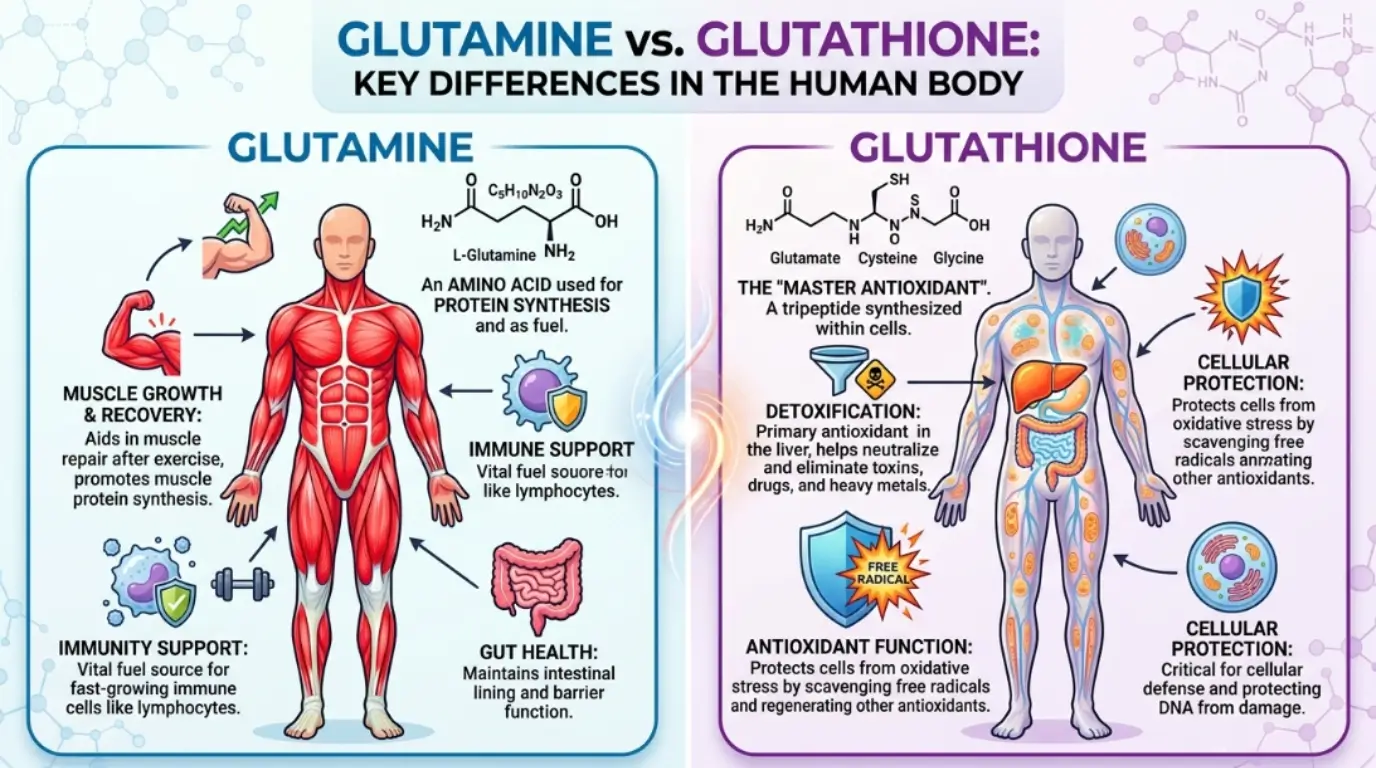
- Glutamine: Amino acid used to build proteins.
Example 1: Found in protein shakes.
Example 2: Helps muscles recover after exercise. - Glutathione: Tripeptide made of glutamine, cysteine, and glycine.
Example 1: Detoxifies liver in humans.
Example 2: Acts as antioxidant in fruits like avocados.
2. Function in the Body
- Glutamine: Supports muscle growth and immune function.
- Glutathione: Protects cells from oxidative stress.
Examples provided separately below for clarity.
3. Primary Location
- Glutamine: Abundant in muscles.
- Glutathione: Found in liver and all body cells.
4. Role in Health
- Glutamine: Helps with gut health and protein synthesis.
- Glutathione: Detoxifies chemicals and supports immune defense.
5. Supplement Form
- Glutamine: Often taken as powder or capsules.
- Glutathione: Available as intravenous, oral, or topical forms.
6. Antioxidant Properties
- Glutamine: Indirect effect via supporting glutathione production.
- Glutathione: Directly neutralizes free radicals.
7. Metabolism
- Glutamine: Converts into energy and other amino acids.
- Glutathione: Recycles itself and other antioxidants.
8. Clinical Use
- Glutamine: Treats muscle wasting and gut problems.
- Glutathione: Used in liver disorders and skin whitening therapy.
9. Toxicity Risk
- Glutamine: Low risk, generally safe.
- Glutathione: High doses may cause digestive upset.
10. Interaction with Drugs
- Glutamine: Few interactions.
- Glutathione: May interact with chemotherapy or liver medications.
Nature and Behavior
- Glutamine: Neutral, supportive, and flexible; acts as a “builder” molecule.
- Glutathione: Reactive, protective, and regenerative; acts as a “cleaner” molecule.
Why People Are Confused
Both names start with “gluta-” and are discussed in health supplements, which makes distinguishing them difficult. Additionally, glutamine contributes to glutathione production, adding to the confusion.
Glutamine vs Glutathione: Table Comparison
| Feature | Glutamine | Glutathione | Similarity |
| Type | Amino acid | Tripeptide | Both contain glutamine |
| Function | Muscle growth, immunity | Antioxidant, detox | Essential for health |
| Main Location | Muscles | Liver & cells | Found in body |
| Supplement Form | Powder, capsule | IV, oral, topical | Both supplementable |
| Toxicity | Low | Moderate | Safe in moderate doses |
Which Is Better in What Situation?
- Glutamine: Best for athletes, gut repair, and immune support.
- Glutathione: Best for detox, oxidative stress, and skin health.
Metaphors, Similes, and Connotations
- Glutamine: “Glutamine is the brick in the wall of muscles.” (Positive)
- Glutathione: “Glutathione is the shield protecting the body.” (Positive)
Idioms/Proverbs (Creative Examples)
- “An ounce of glutathione is worth a pound of cure.”
- “Glutamine builds the house before the storm comes.”
Works in Literature
- Mentioned in nutrition textbooks and medical research journals.
Movies Related to Keywords
- No direct movies made, but documentaries on amino acids or antioxidants include discussions on glutathione and glutamine.
FAQs
1. Are glutamine and glutathione the same?
No, glutamine is an amino acid, glutathione is a tripeptide antioxidant.
2. Can glutamine increase glutathione?
Yes, glutamine helps produce glutathione in cells.
3. Which is better for detox?
Glutathione is directly effective for detoxification.
4. Can both be taken as supplements?
Yes, both are supplementable in various forms.
5. Are there side effects?
Glutamine is generally safe; high-dose glutathione may cause mild digestive issues.
How Both Are Useful for Surroundings
Glutamine supports human health, indirectly benefiting society by promoting strong immune systems and recovery. Glutathione reduces oxidative stress, which is key for longevity and preventing disease, contributing to overall societal wellness.
Conclusion
Understanding the difference between glutamine and glutathione is vital for health, sports, and medical fields. Glutamine fuels muscle growth and gut health, while glutathione protects cells from damage and supports detoxification.
Both are indispensable in their own ways and complement each other in maintaining wellness. For learners, scientists, and health enthusiasts, knowing their distinction enhances informed decisions in supplementation, clinical applications, and lifestyle choices.
With this knowledge, you can target your health needs more effectively, whether it’s improving energy, protecting your body, or aiding recovery.